In June 2026, Asylum Research & Global Assistance (ARGA) took part in a number of international consultation and policy-review processes organized by United Nations bodies, the Organisation for Economic Co-operation and Development (OECD), and financial regulatory institutions.
As part of its institutional work, ARGA monitored ongoing international consultations and identified opportunities to contribute practical expertise derived from its work on transnational criminal proceedings, extradition risks, international police cooperation, migration and asylum-related protection, financial compliance measures, and the protection of fundamental rights.
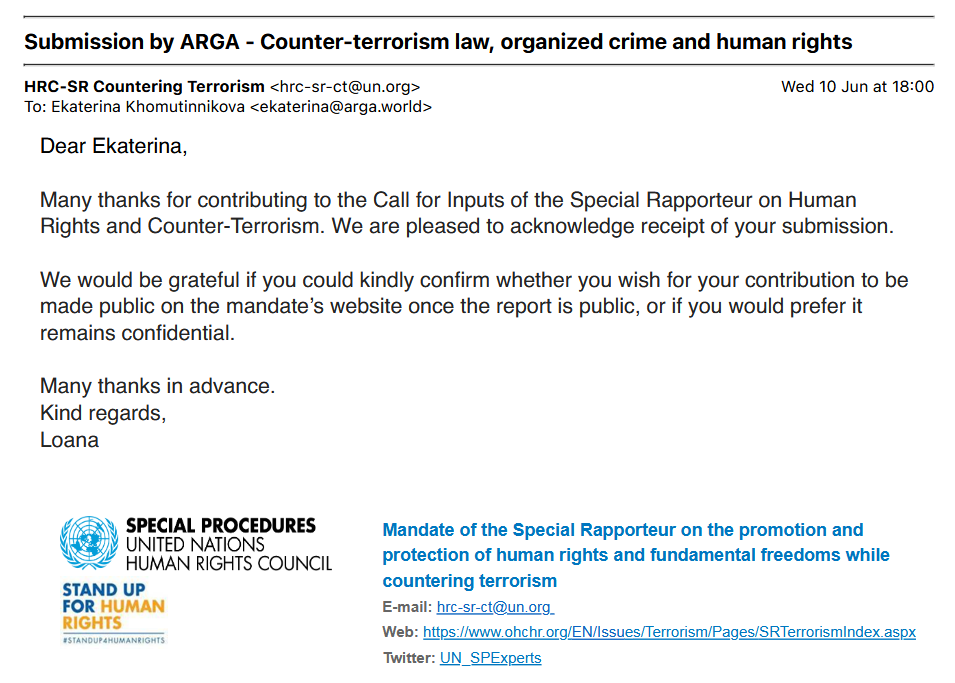
One of the key initiatives involved ARGA’s participation in the United Nations consultation on “Counter-terrorism law, organized crime and human rights”, conducted by the Special Rapporteur on the promotion and protection of human rights and fundamental freedoms while countering terrorism. ARGA’s submission focused on the importance of maintaining a clear legal distinction between terrorism and organized crime and highlighted the human rights risks that may arise when security-based classifications are applied beyond their intended scope.
The submission addressed the potential impact of such classifications on extradition proceedings, migration status, asylum procedures, international police cooperation, access to financial services, and the right to a fair trial. ARGA emphasized the importance of individualized human rights assessments, due process safeguards, judicial review, non-refoulement protections, and effective remedies in all forms of international cooperation.
ARGA also contributed to the OECD Development Assistance Committee (DAC) Review. The organization’s submission focused on the role of rule of law, governance safeguards, transparency, accountability and human rights considerations within development cooperation programs. ARGA highlighted the importance of ensuring that international assistance supports fair and accountable institutions while avoiding unintended reinforcement of structures that may be involved in politically motivated prosecution, abusive extradition practices or misuse of international cooperation mechanisms.
In addition, ARGA participated in the Dubai Financial Services Authority (DFSA) consultation on proposed enhancements to the Islamic Finance Rules. The submission supported legal certainty, regulatory clarity and proportionality, while encouraging clear guidance for market participants regarding the circumstances in which specific regulatory requirements should apply.
As part of its broader monitoring activities, ARGA also identified several emerging international initiatives relevant to the organization’s work, including upcoming FATF discussions related to AML/CFT frameworks, financial exclusion, sanctions compliance, de-risking practices, digital assets and safeguards against abusive financial restrictions.
Through these contributions, ARGA continues to engage with international institutions and policy processes affecting human rights, international cooperation, migration protection, financial regulation and the rule of law. The organization remains committed to promoting safeguards that protect individuals from the misuse of criminal, financial and administrative mechanisms in cross-border contexts and to contributing practical expertise to international discussions on justice, accountability and human rights.